
Theologian's Almanac for Week of June 21, 2026
Welcome to SALT’s “Theologian’s Almanac,” a weekly selection of important birthdays, holidays, and other upcoming milestones worth marking — specially created for a) writing sermons and prayers, b) creating content for social media channels, and c) enriching your devotional life.
For the week of Sunday, June 21:
June 21 is the first day of summer (this year the summer solstice technically will happen at about 4:24am Eastern). What makes for summer’s heat isn’t Earth’s distance from the sun (we’re actually three million miles farther away than we are at the closest point in the planet’s orbit, which happens in early January!), but rather the tilt of Earth’s axis. For this quarter-section of our orbit, since the Northern Hemisphere is tilted toward the sun, we spend more time each day on the sunlit half of the planet, receiving more direct rays of light.
It’s the length of summer days and the more direct angle of the sun’s incoming energy, then, that make the flowers grow and the mercury rise. And why are we tilted in the way we are? Likely because of a primeval collision with another planet-like body, often called Theia, the same collision that created the Moon — the same Moon whose gravitational embrace has kept Earth’s rotation (and the seasons) relatively stable over the eons, a key condition for life to evolve and flourish. So in a sense, we can thank the Moon for the seasons as we know them, and for life as we know it. Happy Summer!
June 21 is also Father’s Day, the third Sunday in June each year, a holiday with roots in two early-twentieth-century occasions: a commemoration for fathers killed in the December 1907 explosion at a West Virginia coal company, and a 1910 celebration inspired by a Civil War veteran and widower who raised six children on a farm in Washington State. Happy Father’s Day!
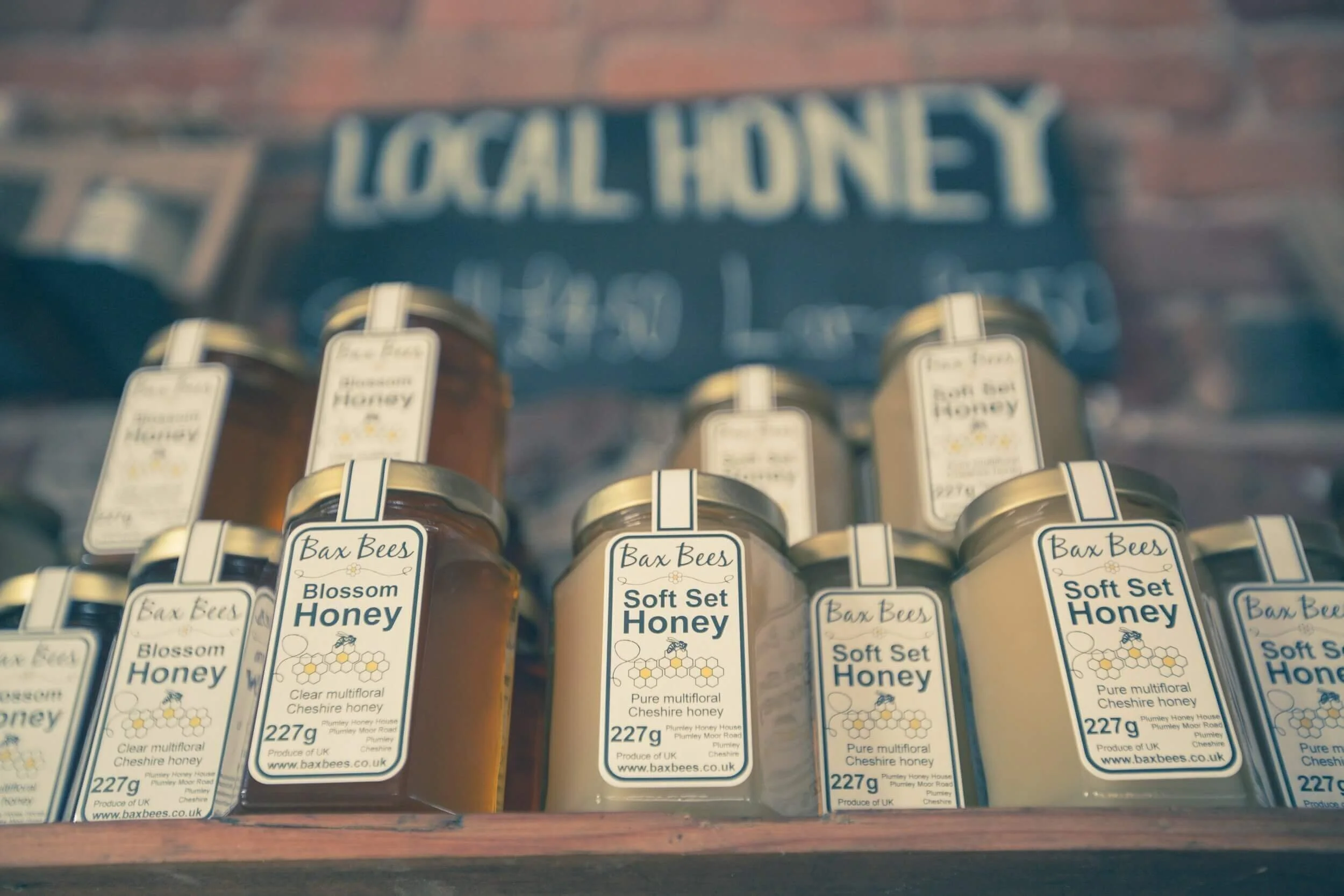
June 23 is Midsummer Night or “Midsummer Eve” in traditions such as those in the U.K., Norway, Denmark, and Estonia. It’s a time of revelry also known as St. John’s Eve, the day before John the Baptist’s birthday. St. John is the patron saint of beekeepers, and this time of year, many beehives are brimming with honey. In fact, this month’s full moon (June 29 this year) has historically been called “the Mead Moon,” since honey was gathered and fermented to make mead — hence the term, “honeymoon.” In a time when the essential work of bees and other pollinators is increasingly appreciated, even as insect populations are in alarming decline, celebrating St. John — who lived in the wilderness, preaching justice and eating “wild honey” (Matthew 3:4) — is more important than ever.
June 24 is the birthday of St. John of the Cross, the mystic and poet born in Spain in 1542. He grew up in an impoverished family, and in his youth worked at a hospital for the destitute in order to contribute to his household’s income. Eventually, mentored by St. Teresa of Ávila, he sought to reform the Carmelite order — and was arrested and publicly punished for his efforts. He wrote poetry in prison, however, and today is widely considered one of Spain’s greatest poets; among his most famous works are Spiritual Canticle and Dark Night of the Soul.
The patron saint of mystics, contemplatives, and Spanish poets, St. John wrote, “contemplation is naught else than a secret, peaceful and loving infusion from God, which, if it be permitted, enkindles the soul with the spirit of love.”
June 27 is the birthday of poet Lucille Clifton, born in 1936 near Buffalo, New York, the daughter of a steelworker and a laundress. Lucille’s mother, Thelma, was a gifted poet herself — but Lucille’s father forbid her from writing, and forced Thelma to throw her poems into the fire. Lucille later wrote:
“fury”
for mama
remember this.
she is standing by
the furnace.
the coals
glisten like rubies.
her hand is crying.
her hand is clutching
a sheaf of papers.
poems.
she gives them up.
they burn
jewels into jewels.
her eyes are animals.
each hank of her hair
is a serpent's obedient
wife.
she will never recover.
remember. there is nothing
you will not bear
for this woman's sake.
And here’s Clifton herself, reading her classic poem about Jesus, “Spring Song.” It’s a beautiful evocation of how Jesus is both a single human being and, as the Gospel of John puts it, the divine “Logos” (Word, Thought, Pattern) itself…
June 27 is also the birthday of Helen Keller, born in Alabama in 1880. When she was just shy of her second birthday, she was struck by an illness that left her both deaf and blind. And though she’s primarily known today as an inspirational figure who overcame adversity, she devoted her energies largely to improving the lives of others. Keller joined the International Workers of the World in 1912, visiting workers in appalling conditions. “I have visited sweatshops, factories, crowded slums,” she said. “If I could not see it, I could smell it.” She also fought for women’s suffrage, protested against World War I, and was one of the inaugural members of the American Civil Liberties Union.
She wrote, “To one who is deaf and blind the spiritual world offers no difficulty. Nearly everything in the natural world is as vague, as remote from my senses, as spiritual things seem to the minds of most people. But the inner or mystic sense, if you like, gives me vision of the unseen… My mystic world is lovely with trees and clouds and stars and eddying streams I have never ‘seen.’”
And here’s a fantastically interesting podcast episode (of Radiolab) on Helen Keller: “The Helen Keller Exorcism.”