
Carl Sagan on Science, Religion, and Awe
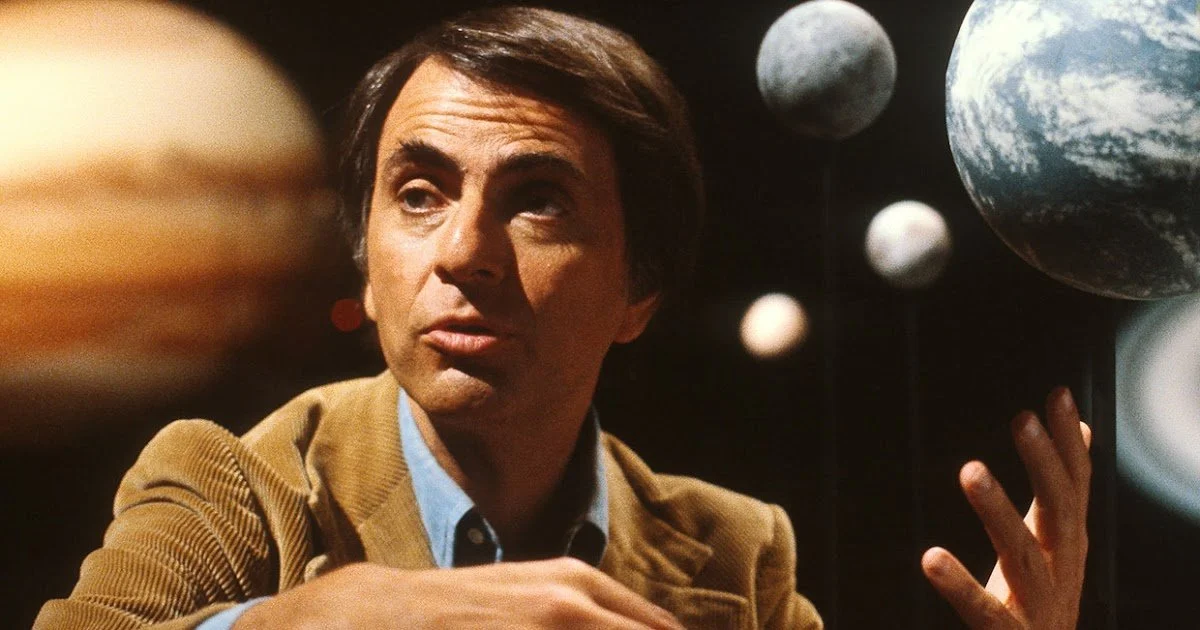
Here’s an excerpt from Sagan’s 1994 bestseller, Pale Blue Dot — laid out as a poem for your reading pleasure:
In some respects, science
has far surpassed religion
in delivering awe. How is it
that hardly any major religion
has looked at science and concluded,
“This is better than we thought!
The Universe is much bigger
than our prophets said, grander,
more subtle, more elegant?”
Instead they say, “No, no, no!
My god is a little god, and I
want him to stay that way.”
A religion, old or new, that stressed
the magnificence of the Universe
as revealed by modern science
might be able to draw forth reserves
of reverence and awe hardly tapped
by the conventional faiths.
Sooner or later,
such a religion will emerge.
+ Carl Sagan
Carl Sagan (1934 - 1996) was an American astronomer and planetary scientist, and became one of the most important, influential science communicators of the twentieth century. In this excerpt from his bestselling 1994 book, Pale Blue Dot, he offers a fundamentally friendly (but nonetheless critical) challenge to religions “old and new.”
Lean into modern science, Sagan insists, not away from it or merely alongside it, and thereby draw on its extraordinary ability to evoke awe and reverence. The astonishing scale of the cosmos, for example, or the exquisite intricacy of a living cell, the marvels of the periodic table’s elements, the mind-bending mysteries of the subatomic world, the elaborate symbiosis among our fellow creatures (and in our own bodies!), and on and on and on.
“Old and new” indeed. Proclaiming the new, inspired by the old — for after all, the ancient prophets and poets did the same in their own contexts, leaning into the best understandings of their day. God “stretches out the heavens like a tent,” the psalmist sings, and also “causes the grass to grow” beneath our feet (Psalm 104:2,14). Jesus is the divine Logos, John declares, the underlying Word/Thought/Pattern through whom “all things came into being” (John 1:3).
The word “science” comes from an old word for “knowledge,” and one of the highest purposes of knowledge is to “deliver awe,” in Sagan’s phrase, and so to build up the mindful, heartfelt reverence we require in order to live brilliant lives of humility and courage, wonder and delight.