Theologian's Almanac for Week of September 20, 2026
Welcome to SALT’s “Theologian’s Almanac,” a weekly selection of important birthdays, holidays, and other upcoming milestones worth marking — specially created for a) writing sermons and prayers, b) creating content for social media channels, and c) enriching your devotional life.
For the week of Sunday, September 20:
September 20-21 is Yom Kippur this year (it begins at sundown on the 20th, and concludes at sundown on the 21st), the Day of Atonement, considered by many Jews to be the holiest day of the year. Traditionally marked with fasting, intensive prayer, and synagogue services, Yom Kippur concludes the High Holy Days, sometimes called “the Days of Awe.”
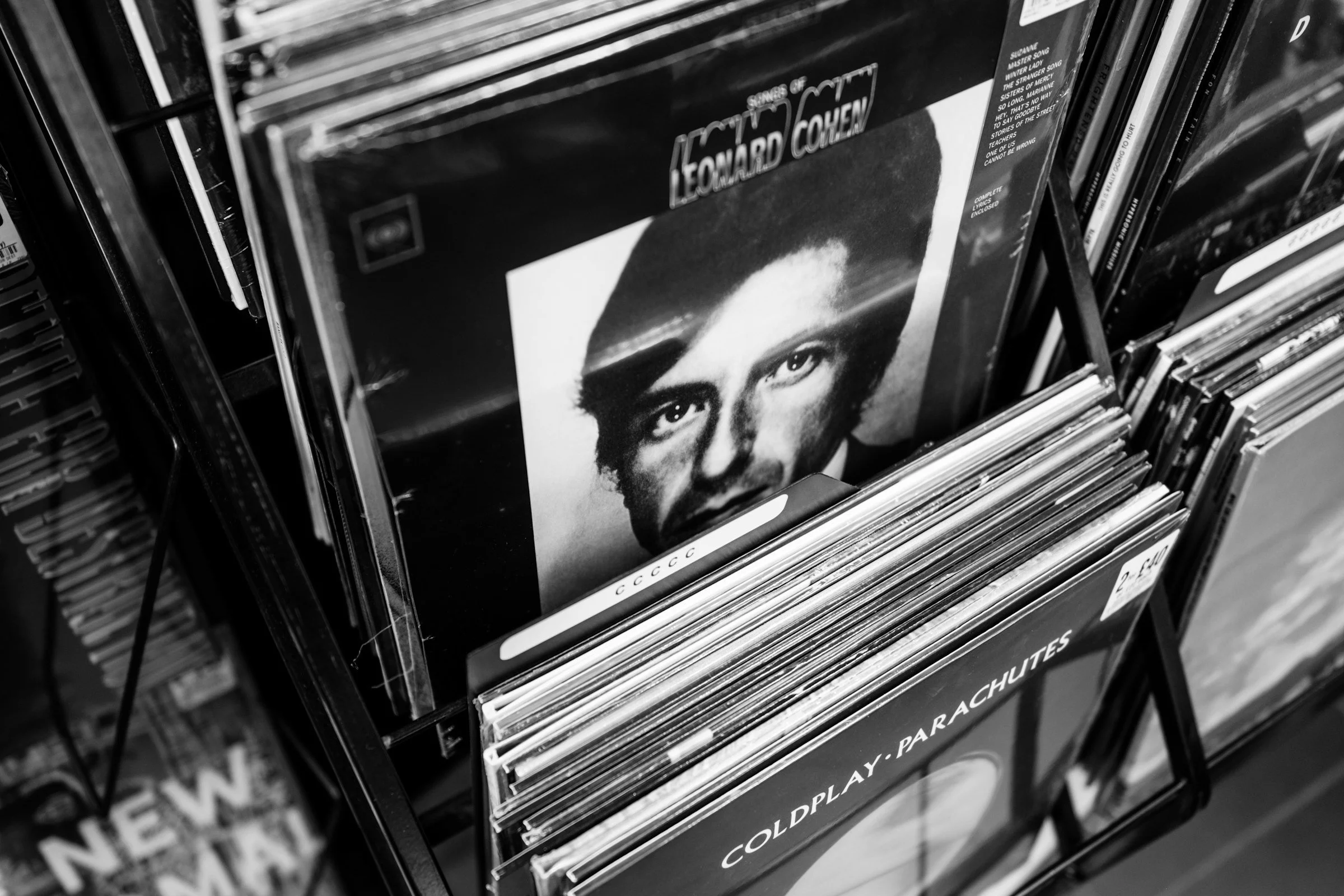
September 21 is the birthday of Canadian singer-songwriter, poet, and novelist Leonard Cohen, born in Montreal in 1934. He began as a poet and novelist, but despite some early critical success, he had trouble making ends meet — so he moved to the United States to become a songwriter and folk singer. His most famous song, "Hallelujah," has been covered by nearly 200 other singers in several languages, and is now the subject of a documentary.
Cohen famously wrote: “There is a crack in everything, that’s how the light gets in.”
September 21 is also the birthday of Girolamo Savonarola, born in Ferrara, Italy, in 1452. A Dominican monk in Florence, he gained a reputation for fiery, prophetic preaching. His sermons and speeches against tyranny made him popular with the people, but unpopular both with Florence’s ruling family, the Medicis, and with the wider church hierarchy. He has a complicated legacy: on one hand, he advocated — and briefly helped create — a modern form of democratic rule in Florence; on the other hand, in his moral zeal he organized “bonfires of the vanities,” destructions of certain books, art, and other objects he and his followers considered decadent. At the same time, he spoke fervently against church corruption, and in 1498, at the age of 45, he was executed — a forerunner of the Protestant and Catholic church reformers who followed in the sixteenth century.
September 22 is the first day of fall this year, the autumnal equinox in the Northern Hemisphere, a position in the Earth’s orbit around the Sun when the planet’s axis is tilted “alongside” the Sun, so to speak, rather than tilted largely toward it (summer) or away from it (winter). This “tilted alongside” position means the Northern and Southern Hemispheres are split evenly between light and dark, making the hours of day and night nearly equal (hence “equinox”). In the Southern Hemisphere, today marks the vernal equinox, the first day of spring.
September 22 is also the day in 1961 the U.S. Congress approved a bill to establish the Peace Corps. Many had opposed the idea, especially Republicans, some of whom argued that taxpayers shouldn’t have to pay for what one senator called a "utopian brainwash." But Republican representative Marguerite Stitt Church, having traveled extensively throughout Africa, stepped up to the podium and made a compelling, historic speech: “Here is something which is aimed right,” she said, “which is American, which is sacrificial — and which above all can somehow carry at the human level, to the people of the world, what they need to know; what it is to be free; what it is to have a next step and be able to take it; what it is to have something to look forward to, in an increase of human dignity and confidence.” Her argument persuaded many Republicans to support the bill, which passed on this day with wide bipartisan support.
September 25th, in the evening, is the beginning of Sukkot this year, the Jewish holiday commemorating two things: first, the harvest festival marking the end of the agricultural year in Israel, and second, the Israelites’ 40 years of journeying through the wilderness after the exodus from slavery in Egypt (Exodus 34:22; Leviticus 23:42-43). “Sukkot” (pronounced, “soo-COAT,” rhymes with “blue boat,” and is typically translated as “booths” or “tabernacles”) is the plural form of “sukkah,” a temporary, walled structure covered with branches or other plant material. It’s thought that such structures were used both by ancient farmers living out in the fields during harvesting and, according to Leviticus, by the Israelites as they wandered in the wilderness after the Exodus.
Many Christian holidays are inspired by Jewish ones (Eastertide is a variation on Passover, Pentecost a variation on Shavuot, and so on), but so far, Sukkot has no official Christian counterpart. Some churches have experimented with a “Season of Creation” in the fall, which would resonate with Sukkot’s connection to the wilderness. St. Francis, whose feast day arrives on October 4, would approve!
And looking ahead:
September 27 is the anniversary of the day Rachel Carson’s groundbreaking book Silent Spring was published in 1962. A marine biologist, Carson had already published three enormously popular, exquisitely lyrical books about the sea, one of which — The Sea Around Us (1951) — won the National Book Award. Silent Spring was an exposé about the ways chemical pesticides were harming plants, wildlife, and people; its title warns of a future dystopia, a spring morning without birdsong.
The book was a sensation, both controversial and influential: after reading it, President Kennedy ordered his science advisors to investigate concerns about DDT. Carson wrote the book while privately living with breast cancer herself, and didn’t live to see the Clean Air Act, the Clean Water Act, the Occupational Safety and Health Act, and the Environmental Protection Agency — each of which owes a significant debt to Silent Spring. The book is now widely credited with helping to inaugurate the modern environmental movement.