
Theologian's Almanac for Week of April 12, 2026
Welcome to SALT’s “Theologian’s Almanac,” a weekly selection of important birthdays, holidays, and other upcoming milestones worth marking — specially created for a) writing sermons and prayers, b) creating content for social media channels, and c) enriching your devotional life.
For the week of Sunday, April 12:
April 12 is the day in 1633 that Galileo Galilei was brought before the Inquisition for supporting the idea that the Earth revolves around the Sun, rather than the other way around. After agreeing to formally recant, he was sentenced to indefinite house arrest — and died at home eight years later.
But what Galileo said in his defense is worth recalling: he insisted that scientific research and Christian faith are entirely compatible, and that in fact, study of the universe would promote the proper interpretation of Scripture. This is the perfect week to remember and affirm his wisdom — and his brilliance. Indeed, legend has it that immediately after he recanted, as he rose from kneeling before his inquisitors, Galileo defiantly whispered (referring to the Earth), e pur, si muove (“even so, it does move”).
April 12 is also Easter Sunday for many Orthodox Christians. The Orthodox Church calculates the date of Easter according to the Julian Calendar — as opposed to the Gregorian Calendar, which Pope Gregory instituted in 1582 in order to incorporate innovations in astronomy and timekeeping.
April 13 is the day in 1964 that Sidney Poitier became the first African-American to be awarded the Oscar for Best Actor for his performance in “Lilies of the Field,” a film about a group of nuns who come to believe an African-American itinerant worker has been sent to them by God to help them build a chapel.
April 13, in the evening, is also the beginning of Yom HaShoah, “Holocaust Remembrance Day”; the observance continues until the evening of April 14. It’s a day of remembrance, mourning, and honor, recognizing both the approximately six million Jews killed by the Nazis (and their collaborators), and the heroism of the many Jews (and their allies) who, with courage and creativity, resisted.
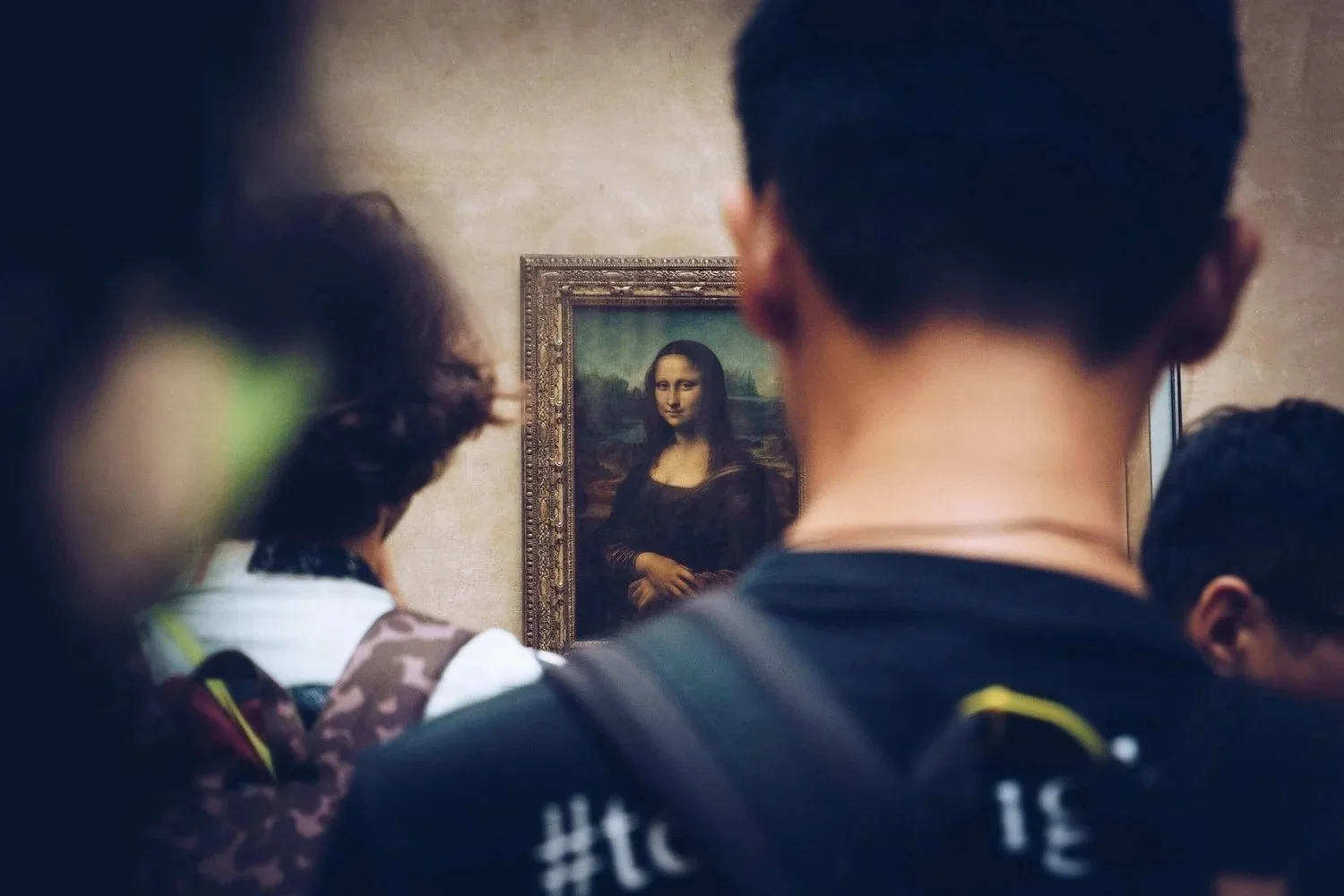
April 15 is the birthday of Leonardo da Vinci, born in Vinci, Italy, in 1452. A man of multiple interests and talents, he’s best known for his mural, The Last Supper (worth recalling this week in particular, since that supper itself was recently commemorated), and of course the enigmatic Mona Lisa. The Mona Lisa hangs today in the Louvre in Paris, typically surrounded by a throng of cell-phone-toting tourists — but just a few steps away is another Leonardo masterpiece that often goes relatively unnoticed: his haunting portrait of John the Baptizer, emerging from the shadows, pointing toward the cross.
April 15 is also traditionally tax day in the United States — not often understood as a theological event! But taxes, after all, are a primary means by which “We, the people” pool and allocate our collective resources for the sake of the community as a whole: bridges and roads, Medicare and the military, food security and public education. The earliest Christian communities also organized themselves with this basic underlying choreography: pooling and allocating (Acts 4:34-35). Exactly how we pool and allocate remains a subject of intense and important debate, of course, especially today — but in any case, while it’s common to grumble about “paying taxes to the government,” in fact our taxes are one of the most concrete, consequential ways we chip in to support one another and the vibrancy of the wider neighborhood, the Beloved Community.
April 15 is also the feast day of St. Ruadan (“ruadan” means “red-haired”), considered one of the Twelve Apostles of Ireland, born in Leinster in the sixth century CE. According to the Book of Leinster (a medieval Irish manuscript), St. Ruadan’s day is when the birds are released from the thrall of winter.
April 17 is the birthday of Isak Dinesen, born Karen Dinesen near Copenhagen, Denmark, in 1885. Growing up, she loved listening to stories from Danish mythology, and became a writer at an early age. After a failed effort at running a coffee plantation in Kenya, she returned to writing — choosing “Isak” as a pen name, the Danish version of “Isaac” from the Bible, which means, “laughter.” Her breakthrough book was Seven Gothic Tales, full of magical realism and wild adventures, and she went on to one of the most celebrated literary careers of the twentieth century, including her short story, “Babette’s Feast” (the film version is now considered a classic) and her memoir, Out of Africa.
Like her life and writing, Dinesen’s theology is shot through with adventurous wit. “Truth is for tailors and shoemakers,” she wrote. “I, on the contrary, have always held that the Lord has a penchant for masquerades.” And again: “God made the world round so we would never be able to see too far down the road.”
April 17 is also the birthday of the American novelist and playwright, Thornton Wilder. Wilder won Pulitzer prizes both for his novel, “The Bridge of San Luis Rey,” and his beloved play, “Our Town,” one of the most-produced plays in American history. Each work shimmers with theological themes. The novel is the story of a bridge that collapses in 18th-century Lima, Peru, killing the five people crossing it — and a Franciscan friar who, after witnessing the tragedy, tries to figure out why those five people had to die. And “Our Town” is what Wilder called “a little play with all the big subjects in it; and it’s a big play with all the little things of life lovingly impressed into it... an immersion into a New Hampshire town.” One of its principal characters, Emily, famously exclaims, “O earth, you’re too wonderful for anybody to realize you. Do any human beings ever realize life while they live it? — every, every minute?” Read her soliloquy here.