
Theologian's Almanac for Week of December 28, 2025
December 28 is the day in 1895 that Auguste and Louis Lumière held the first commercial movie screening, a series of ten (very) short films shown at the Grand Café in Paris, starting with “Workers Leaving the Lumière Factory” (you can watch it here). The film is 46 seconds long, depicting a bustling crowd of workers spilling out onto the street. So began one of the most influential and lucrative popular forms of art in human history.
December 29 is the anniversary of the 1890 massacre at Wounded Knee, where United States federal troops killed almost 300 Lakota men, women, and children. One of the survivors was Black Elk, the famous medicine man, who was 27 years old at the time of the massacre. He wrote: “I can see that something else died there in the bloody mud, and was buried in the blizzard. A people’s dream died there.” And without diminishing the loss on that day, modern scholars and indigenous activists have sought to counter the narrative that the Lakota people, and Native American people more generally, were completely erased by those brutal events; on the contrary, indigenous Americans have survived and thrived and continued to dream ever since. For this perspective, check out David Treuer’s recent book, The Heartbeat of Wounded Knee: Native America from 1890 to the Present.
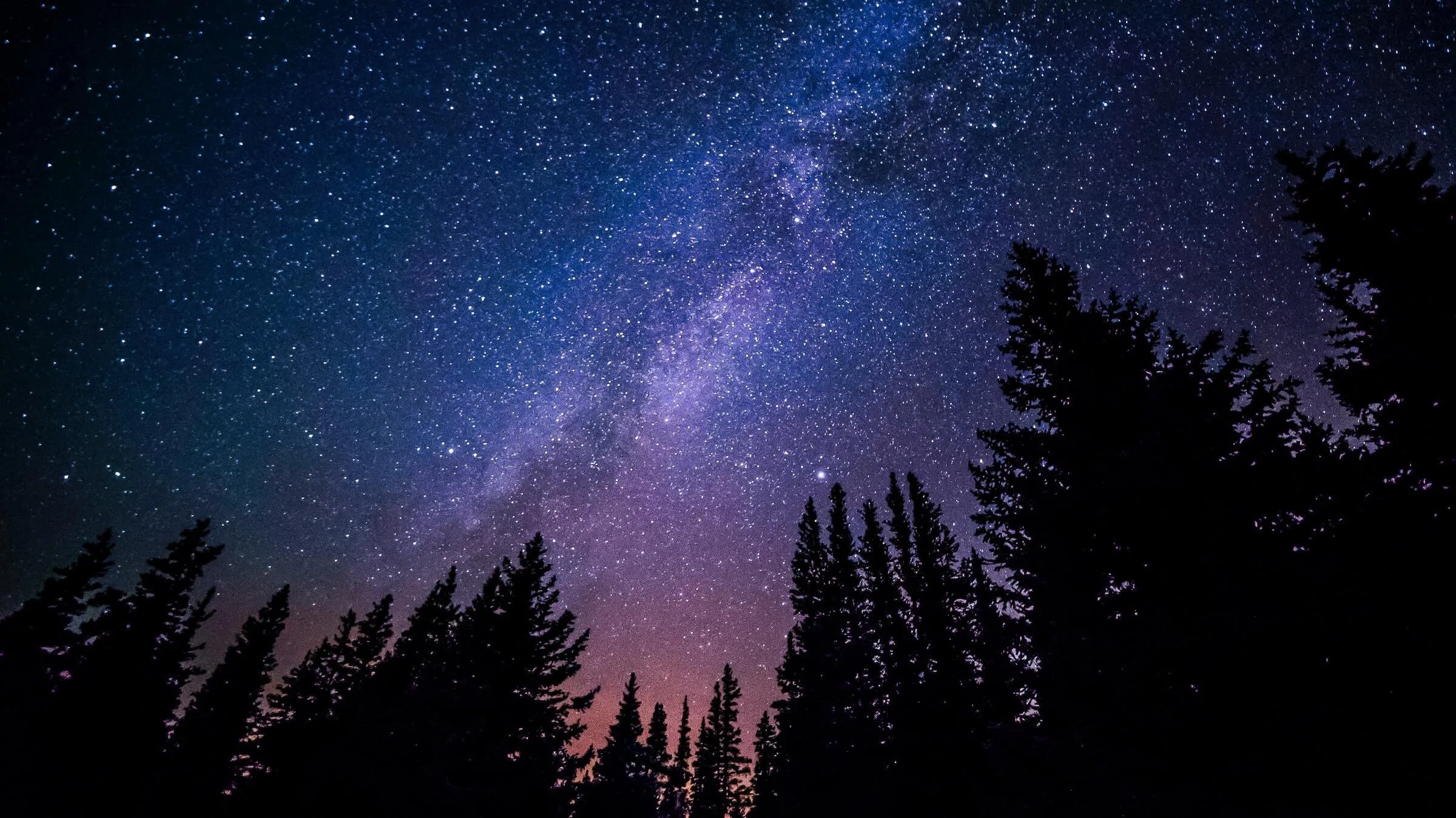
December 30 is the day in 1924 when astronomer Edwin Hubble announced the discovery of other galaxies beyond the Milky Way. At the time (barely a hundred years ago!), it was common knowledge that the Milky Way was the only galaxy in the universe. As a young astronomer, Hubble joined the team at the Mount Wilson observatory in California just as they unveiled the new, 100-inch Hooker Telescope. Hubble decided to study nebula (glowing clouds of gas) — but as he looked at the Andromeda Nebula through the Hooker Telescope, he realized there were stars inside the nebula, and that one of those stars was a Cepheid variable: a particular kind of pulsating star.
Previously, Harvard astronomer Henrietta Leavitt had discovered that, by measuring a Cepheid variable star’s brightness and rate of pulsation, it was possible to calculate a star’s distance from Earth. And when Hubble did exactly that, the result was jaw-dropping. The calculations indicated that star was nearly a million light years away (we now know it’s more like two million). This was no nearby nebula in the Milky Way galaxy. This was an another galaxy entirely, far, far away. And today, thanks to the telescope named after Hubble (and now the James Webb Telescope), we know that there are no less than hundreds of billions of galaxies in the universe! Think of it: in almost exactly 100 years, our understanding of creation went from one galaxy (what Hubble was taught as a student) to hundreds of billions — some recent estimates put the number at something like two trillion!
December 31 is the birthday of the painter Henri Matisse, born in France in 1869. As a young adult just out of law school, as he was struggling with appendicitis, his mother gave him a box of paints — and he was overcome with a powerful sense of vocation. As he later put it: “From the moment I held the box of colors in my hands, I knew this was my life. I threw myself into it like a beast that plunges towards the thing it loves.”
Toward the end of his life, Matisse wrote: “There are always flowers for those who want to see them.”
January 2 is the feast day of Gregory of Nanzianzus, the fourth-century Archbishop of Constantinople, also known as Gregory the Theologian. An eloquent preacher, he famously said: “Grace is given not to them who speak [their faith], but to those who live their faith.” And again: “For nothing is so pleasant to men as talking of other people's business, especially under the influence of affection or hatred, which often almost entirely blinds us to the truth.”
January 3 is the feast day of St. Genevieve, the fifth-century nun now honored as the patron saint of Paris. She devoted her life to charitable works, often despite difficulties or opposition. She’s traditionally invoked in times of dire necessity, especially in situations of drought, flooding, or conflict.